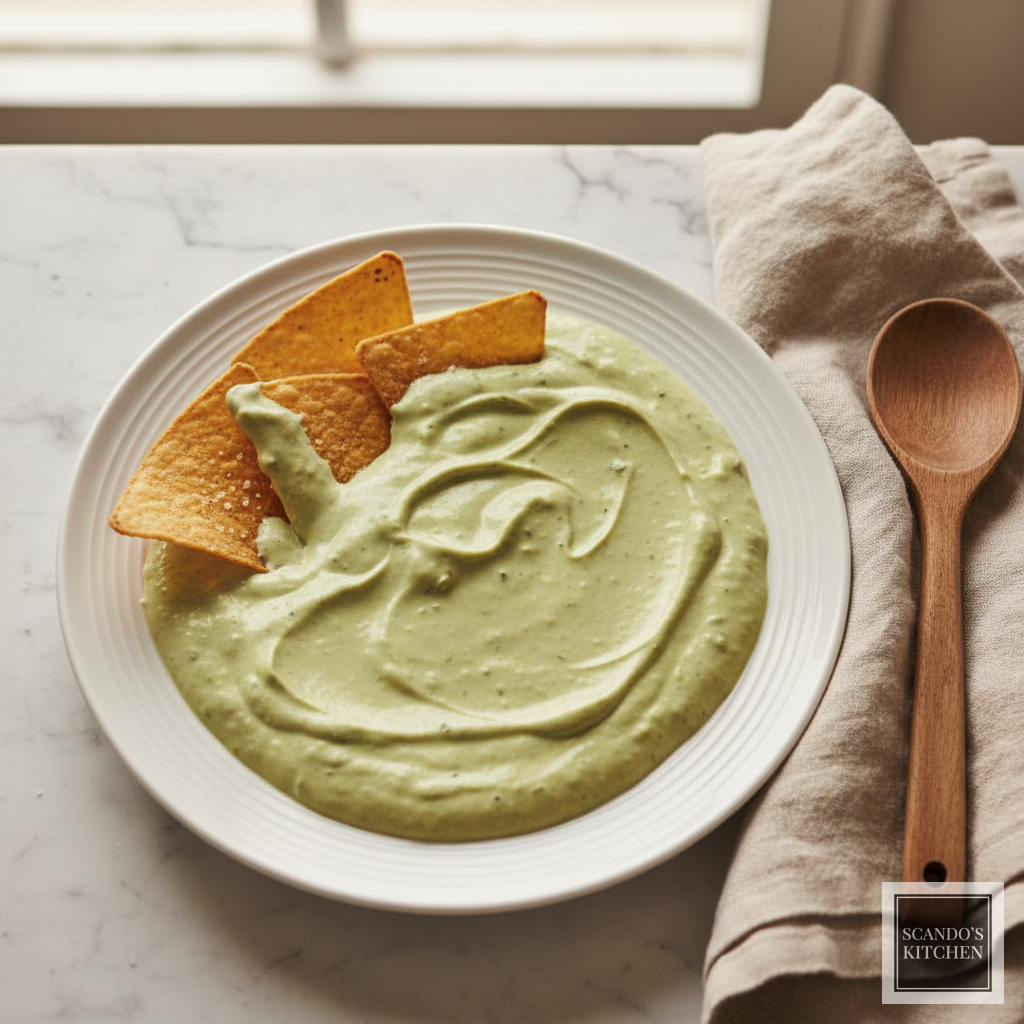
Salsa Dona (Creamy Jalapeno Salsa)
If the standard salsa on your counter is a reliable sedan, this creamy jalapeno dream is a tricked-out, low-rider spaceship that runs on unicorn power and regret-free spice. It's the velvet hammer of sauces: impossibly smooth, intensely flavorful, and scientifically proven to make you eat three times as many chips. Dip your toe in the creamy end of the pool, you deserve this kind of velvety chaos.
Ingredients
Instructions
1Find a small saucepan that's just the right size to comfortably hold your whole jalapeños and quartered onion without too much extra space. Place the jalapeños and onion in the saucepan, and pour in enough cold water to cover about half-way up the jalapeños. You don't need to cover them completely, just enough for a nice steamy bath. Place a lid on the pot, turn your burner to high, and bring the water to a rolling boil. This usually takes about 5-7 minutes, depending on your stovetop and the amount of water you're using. Just keep an eye on it!
2Once your sauce reaches a boil, reduce the heat to a simmer. We're aiming for a gentle, bubbly murmur. Let it simmer for a good 15 minutes. As it simmers, keep an eye on those jalapeños. They'll start out a bright, vibrant green, but as they soften and blend into the sauce, they'll change to a more subdued, almost army-green color. This color change is your signal! If, after 15 minutes, they still look a bit too firm and bright, no worries at all. Just turn off the heat and let them sit in the pot for a few more minutes. Our goal is to not only cook them but also to bring out their full flavor and creamy texture.
3Pour out all the cooking water from the pot, leaving just the peppers & onions behind. Using a pair of tongs, push the jalapenos against the sides of the pot to burst them pushing out any of the water that has made its way into the jalapenos. We want to remove as much of the water as possible as water breaks emulsions, and we don't want a bland soupy mess.
4Let's get this salsa party started! Grab your high-powered blender, or my favorite a stick blender. Add your jalapeño, onion, a good pinch of salt, and the chicken powder and give it a whir (if you are using a blender with hot jalapeno's, be sure to open the lid a crack to let the steam escape or else you may have a spicy mess to clean up) . Start your blender on a low speed, just enough to get the ingredients moving. You'll want to see a whirlpool effect forming. Once everything starts to chop and swirl, gradually increase the speed to medium-high. We're aiming for a smooth, consistent vortex in the center. Here's an important step: with the blender still running at that medium-high speed, slowly begin to drizzle in your oil through the opening in the lid blending until you have a creamy evenly blended salsa.
5Grab a clean spoon – Taste the salsa. It likely will be much spicier right after blending so be ready, it will calm down after about 30 min. First, let's think about the salt. Does it taste bright and lively, or does it feel a little bit muted? If it needs a boost, try adding a small pinch, about ¼ teaspoon at a time. Stir it in really well, then give it another taste. If it starts tasting salty but still flat, chicken powder. BUT a little goes a long way - just a sprinkle. Once you are dialed in, put the salsa in a squeeze bottle (with an opening large enough to let out your salsa), stick a label on it and enjoy. It will keep for a week in the fridge, but will be best within 3-4 days, make it fresh when needed!

Scando Says
About This Region

Reviews (0)
Sign in to leave a review
No reviews yet. Be the first to review this recipe!