
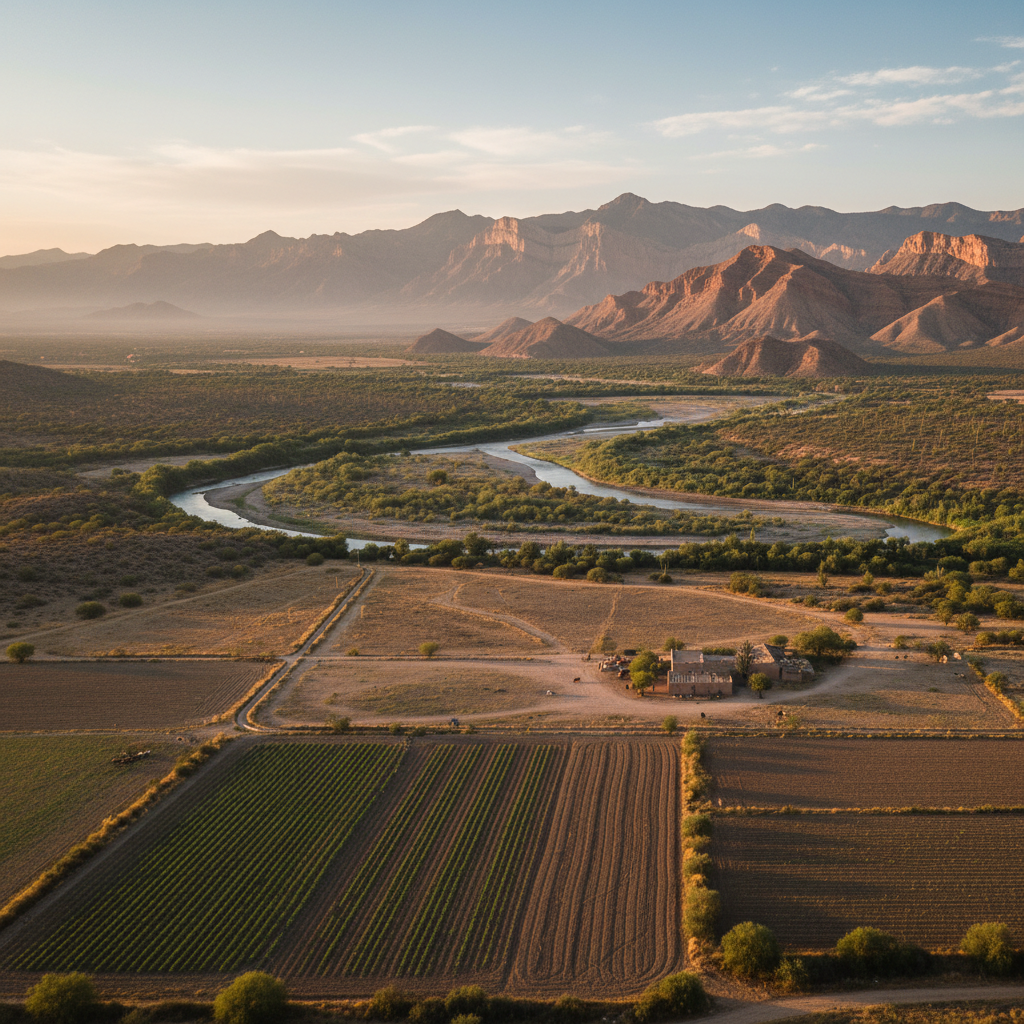
Northern Desert (Sonora, Chihuahua, Coahuila, Nuevo León)
Northern Mexico Environment - Arid desert, open rangeland - Sparse agriculture (wheat grows better than corn) - Large cattle operations; grain-finished beef - Mesquite abundant Cultural DNA - Ranch culture → survival, beef is the centerpiece, not a filling - Mobility, self-sufficiency - Grilling is social and ritualized (cabrito culture overlaps here) Taco Characteristics - Cuts: Diezmillo (chuck), arrachera (skirt), ribeye trims, goat - Fat: Animal fat - Seasoning: Salt only; maybe crushed garlic, heat & acid low - Cook: Direct mesquite fire, fast and hot - Texture Dry, grilled, chopped - Tortilla: Flour (wheat thrives here), stretched thin - Salsas: Minimalist — roasted chiltepin, serrano, or pico-style Why it tastes this way - Good beef + fire = don’t touch it. - Anything more is considered disrespectful. - Vegetables were unreliable; cattle were not. Food needed to be portable, filling, and repeatable. Sauces were luxuries, not foundations. This is why northern food tastes “plain” to outsiders—it’s cuisine built on confidence and restraint, not compensation.
The Northern Desert region is characterized by an extreme arid to semi-arid climate, featuring high diurnal temperature variation. Summers are intensely hot (often exceeding 100°F/38°C), and winters can be surprisingly cold, especially at higher elevations. Rainfall is scarce and highly seasonal, primarily occurring during short, intense summer monsoons. This lack of reliable water fundamentally shaped the cuisine, necessitating a focus on durable, non-perishable ingredients and efficient cooking methods.
The intense heat mandated specific preservation techniques, primarily involving salting and drying (like machaca—dried, shredded beef) to ensure protein sources lasted through the long dry spells. The high temperatures also favored outdoor cooking, leading to the development of grilling over open fires as the primary culinary method, minimizing heat buildup inside dwellings. The scarcity of water meant that elaborate braising or steaming techniques common in wetter regions were impractical, reinforcing the preference for dry, fast-cooking methods.
Ingredient availability was severely limited by the climate. Traditional Mesoamerican staples like corn struggled, while hardier grains like wheat, introduced by Europeans, thrived. This climatic reality is the primary driver behind the region's reliance on flour tortillas and its foundational focus on livestock (cattle, goats) which could graze the vast, dry rangelands, rather than intensive, water-dependent agriculture.
The geography of Northern Mexico is dominated by vast, high-altitude plateaus and expansive desert basins interspersed with rugged mountain ranges (Sierra Madre Occidental and Oriental). This terrain is characterized by open rangeland, ideal for large-scale livestock grazing, which became the economic and culinary engine of the region. The sheer scale of the terrain necessitated a highly mobile, self-sufficient ranching culture.
Water sources are few and far between, typically limited to rivers fed by mountain runoff (like the Rio Grande/Río Bravo and its tributaries) or deep aquifers. These limited water sources dictated where settlements and, consequently, where agriculture could be established, often creating isolated, self-contained communities. The scarcity of surface water reinforced the reliance on drought-resistant animals rather than water-intensive crops.
The extensive, open terrain also defined trade routes. Historically, these routes were long and arduous, connecting the northern ranches to central Mexican markets or, later, to the burgeoning markets of the American Southwest. The food needed to be portable and durable for these journeys, further emphasizing dried meats and flour-based staples. The terrain itself fostered a cuisine of rugged simplicity and high caloric density necessary for hard physical labor and travel.
The soils across the Northern Desert region are predominantly arid and alkaline, often classified as Aridisols. They are typically rocky, sandy, and low in organic matter due to the minimal rainfall and sparse vegetation cover. While these soils are rich in certain minerals, their low water retention capacity makes them challenging for traditional Mesoamerican agriculture, particularly corn (maize), which requires deep, fertile soil and consistent moisture.
However, the soil and climate proved surprisingly suitable for certain introduced crops. Wheat, which is more tolerant of dry, alkaline conditions and shorter growing seasons, flourished, especially near river valleys where irrigation was possible. This environmental factor is the direct reason why the flour tortilla replaced the corn tortilla as the regional staple. Furthermore, the land's ability to support tough, drought-resistant grasses and shrubs, coupled with the vast space, made it perfect for large-scale ranching, cementing beef and goat as the central proteins of the cuisine, regardless of the soil's agricultural limitations.
The culinary development of Northern Mexico is a story defined by successive waves of migration and cultural collision. The initial indigenous populations (such as the Raramuri and Yaqui) utilized native desert resources like mesquite, prickly pear, and wild game. However, the most profound influence came with the Spanish colonization, which introduced the 'five pillars' of Northern cuisine: cattle, wheat, goats, citrus, and new preservation techniques.
Crucially, the region was often sparsely populated by Spanish settlers, leading to the establishment of large haciendas and ranches rather than dense agricultural communities. The need for labor and defense led to the arrival of diverse groups, including Native American auxiliaries and, later, European immigrants (especially German and Italian settlers in the late 19th and early 20th centuries) who contributed techniques like sausage making and dairy processing, further diversifying the meat-centric diet.
Perhaps the most defining migration factor was the proximity and later economic integration with the United States. Trade routes and cultural exchange across the border (especially after the Mexican-American War) facilitated the adoption of certain cuts of beef, industrial milling of flour, and the development of ranching practices that prioritized grain-finished beef. This continuous cross-border interaction cemented the Northern Mexican cuisine's distinct identity, characterized by its high-quality beef focus and its departure from the corn-centric traditions of Central and Southern Mexico.
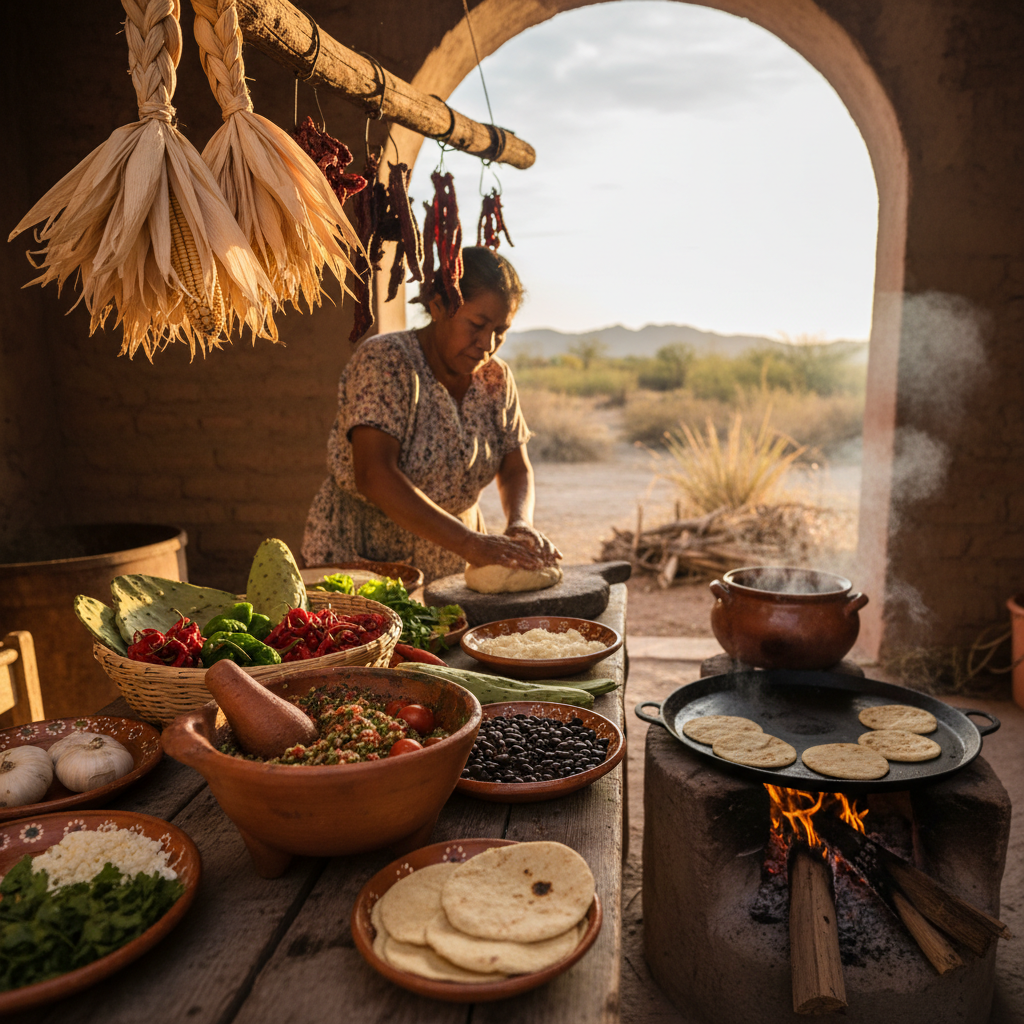
The cultural context of Northern Mexican cuisine is rooted deeply in the ethos of the ranch (cultura vaquera)—a tradition emphasizing self-sufficiency, mobility, and rugged individualism. Food preparation reflects this lifestyle: it must be simple, hearty, portable, and capable of being cooked quickly over an open fire, often utilizing only the resources immediately at hand (meat, salt, fire).
Beef is not merely a protein
it is the centerpiece and a social ritual. The carne asada is the quintessential social gathering, a ritualized event where the quality of the meat and the skill of the grill master (parrillero) are paramount. This ritual is built on restraint—the belief that high-quality ingredients require minimal intervention. To add complex sauces or excessive seasoning is often viewed as masking the quality of the beef, a sign of disrespect to the product and the ranching tradition.
Feast traditions are centered around large cuts of grilled meat (like cabrito or whole cuts of beef). Unlike Central Mexico, where religious festivals often feature complex moles or elaborate preparations, Northern feasts prioritize the communal experience of fire, meat, and shared labor. This cultural preference for simplicity and quality over complexity and quantity defines the restrained yet confident flavor profile of the region.
Asado al Carbón/Mesquite Grilling
Cooking meat directly over hot coals, primarily sourced from mesquite wood. This technique imparts a signature smoky flavor and requires high, fast heat, reflecting the ranching culture's need for efficient, outdoor cooking.
Salado y Secado (Salting and Drying)
A preservation method, essential in the arid climate, used to create products like *machaca* (dried, shredded beef). Meat is heavily salted and air-dried, allowing protein stores to last indefinitely without refrigeration.
Sobrerronda (Fat Rendering)
The practice of rendering beef or pork fat (sebo/manteca) for use in cooking, especially for frying beans or making flour tortillas. This technique maximizes the use of the animal and provides necessary calories and richness in a region where vegetable oils were historically scarce.
Tortilla Estirada (Stretched Tortilla Making)
The technique of stretching wheat dough very thinly, often using a rolling pin or hand-stretching, to create large, pliable flour tortillas. Developed because wheat was the dominant grain, these tortillas are essential for wrapping the dry, grilled meats.
Cabrito al Pastor (Spit-Roasted Kid Goat)
A specialized grilling technique, particularly prominent in Nuevo León, where a whole young goat is butterflied and slowly roasted over indirect heat on a vertical spit. This method ensures tender, smoky meat and is central to celebratory feasts.
Primary cut for everyday tacos and grilling; prized for flavor and marbling.
A highly prized cut for grilling (*carne asada*); known for its intense beef flavor and tenderness when cooked hot and fast.
The foundational starch, used exclusively for flour tortillas due to the climate favoring wheat over corn.
A celebratory protein, particularly in Nuevo León, often prepared whole, roasted over a fire.
The essential fuel source for grilling, imparting the signature smoky flavor to meats.
Dried, shredded, and seasoned beef; a staple preserved protein often rehydrated and scrambled with eggs.
A tiny, intensely hot wild pepper, often used dried and crushed for minimalist salsas and seasoning.
A common accompaniment to grilled meats, charred whole alongside the beef.
A necessary side dish, often cooked simply and sometimes refried with rendered animal fat.
The primary cooking fat, used in tortillas, frying, and flavor base.
A mild, semi-soft cheese developed for melting, often used in quesadillas or as a side to grilled meats.